In this excerpt, Chavarría discusses the ways in which the Devil’s mask initially captured his attention and the double perspective/participant-observer position that it provides.
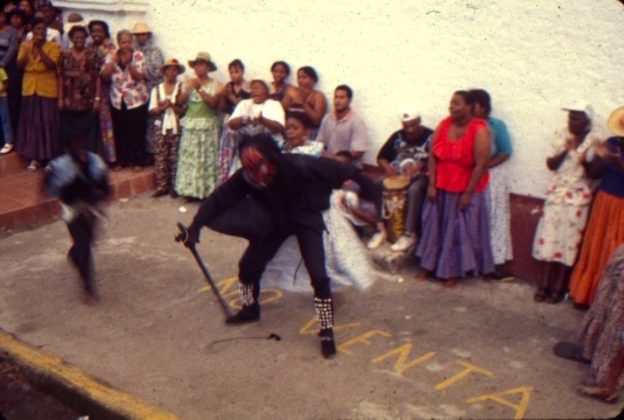
In this excerpt, Chavarría discusses the ways in which the Devil’s mask initially captured his attention and the double perspective/participant-observer position that it provides.
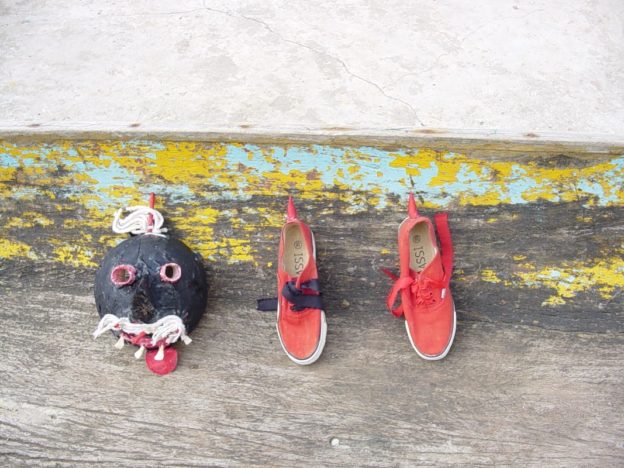
In this excerpt, Chavarría discusses his mentor Celedonio Molinar’s lasting legacy to the town and to the Congo tradition, including a charge to embrace the tradition with pride and joy.

In this excerpt, Chavarría discusses the ways in which the Major Devil character has changed over his lifetime. He focuses particularly on his choice to follow his mentor’s example by wearing a smaller mask and discusses the value of smaller masks in relationship to the value of larger ones, which many younger devils choose to wear.
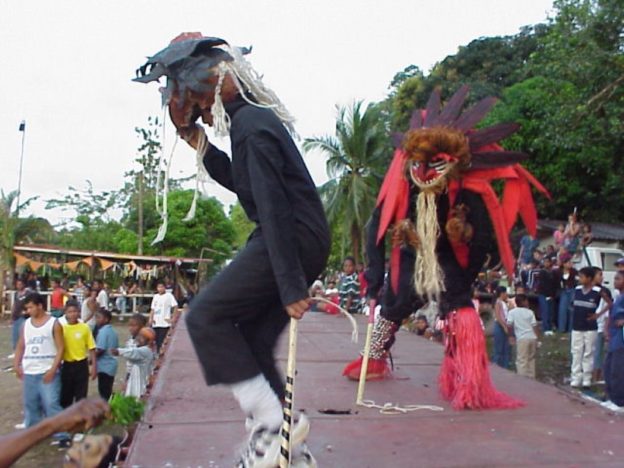
In this excerpt, Molinar discusses the current existence of three people who play the role of Major Devil in the Congo tradition even though the official narrative about the tradition only signifies one Major Devil character playing at any one time.
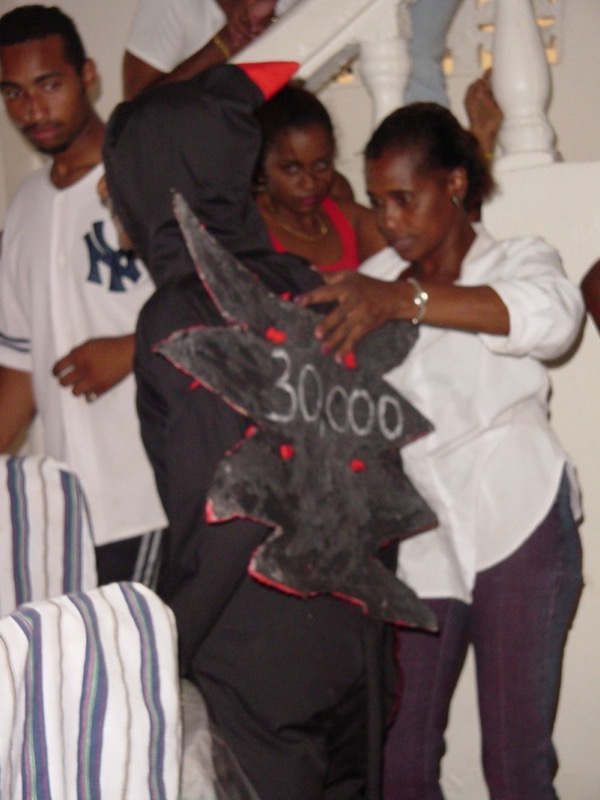
In this excerpt, Solís discusses the ritual process that Celedonio used to prepared to “transform” into the Major Devil character.
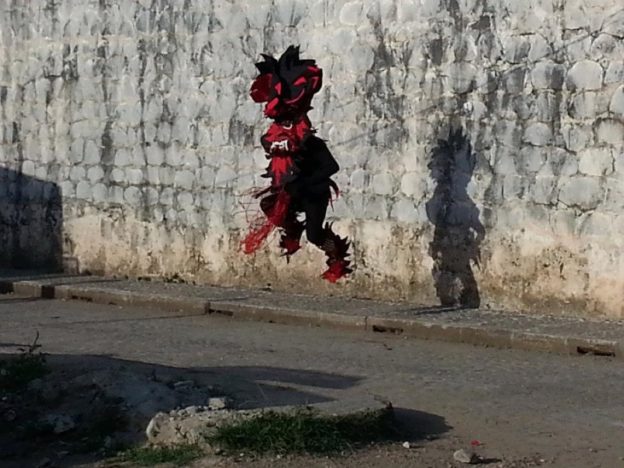
In this excerpt, Solís discusses the relationship between the economy and the increasingly violent ways in which younger generations of devils within Congo traditions of Panama embody the character.

In this excerpt, Ileana discusses the unique energy and magnetism that made Celedonio Molinar’s embodiment of the devil character within the Congo tradition of Portobelo, Panama so special.
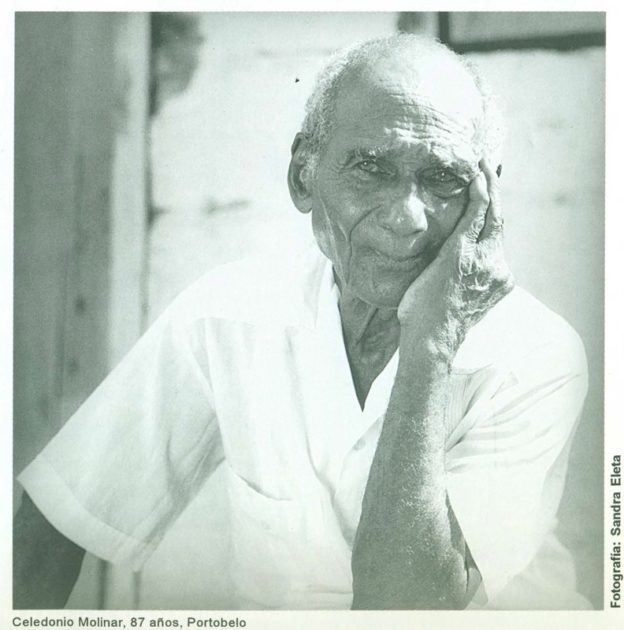
In this excerpt, Solís discusses what she believes is the legacy of Celedonio Molinar, renowned Major Devil in the Congo tradition of Portobelo, Panama.
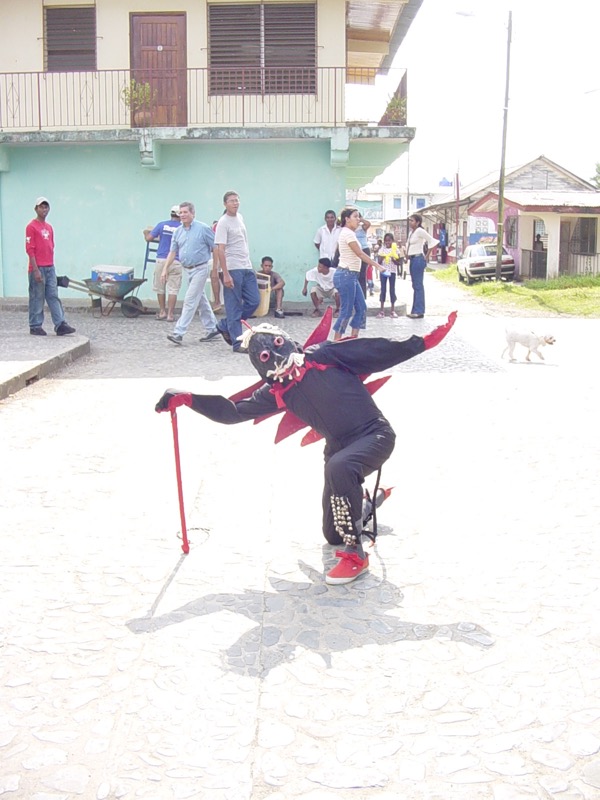
In this excerpt, Molinar discusses how he came to play the role of Major Devil in Portobelo. And how he reintroduced the practice of “Blessing” or “Baptizing” the Devil.
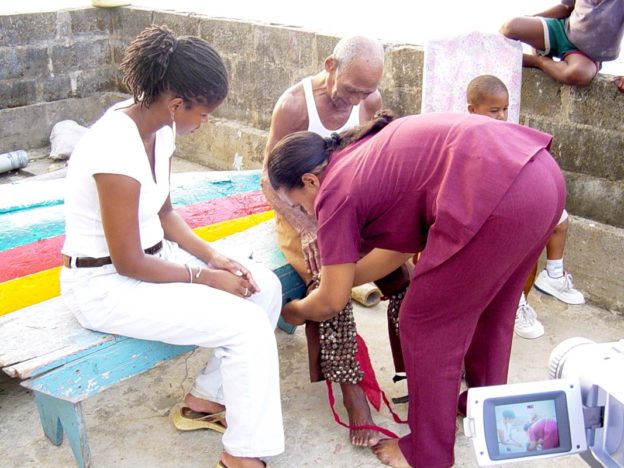
In this excerpt, Molinar discusses how he learned the role of Major Devil and the tradition of “Blessing the Devil” from a Portobelo native named Viudo Ceballos who had moved to Nombre de Dios. He also describes the way the devil tradition was practiced in Portobelo when he arrived there in 1945.